What is the cooperation model between Chinese sweater factories and suppliers?
Leave a message

Hey guys, let’s talk about something I deal with every single day as a supplier who works hand-in-hand with Chinese sweater factories—because let’s be real, sweater production isn’t just yarn and knitting needles, right? It’s a whole team dance, and the cooperation model here is way more dynamic than most people think. I’ve been in this game for 7 years now, jumping between factory floors, checking yarn batches, and sitting through late-night chats with production managers, so I’ve seen firsthand what works, what doesn’t, and why this model is the backbone of why Chinese sweaters are the go-to for brands and retailers worldwide.
First off, let’s get one thing straight: this isn’t a “factory talks at supplier” setup. We’re in a symbiotic relationship, full stop. Most of the Chinese sweater factories I partner with are mid-sized to large (we’re talking 50+ knitting machines, teams of 100+ production staff) but they don’t hold all the cards—and we suppliers don’t either. Wait, but why is that? Because factories have the machinery, the skilled knitters, the on-the-ground production crew who can tweak a design at 2 a.m. if a sample’s off. We suppliers? We have the network for raw materials (yarn, buttons, zippers), the quality control expertise that’s not just checking for loose stitches but making sure fabric shrinkage is spot-on, and we also bridge the gap between brands’ vague ideas and what’s actually possible to produce efficiently.
Let me break down the core parts of this model because it’s not one-size-fits-all. There are three main buckets, basically: pre-production prep, in-production collaboration, and post-delivery support. And that’s where those products I know so well come in—like the chunky knits, color-matched jacquards, off-shoulder waffle ones, cardigans, even the lamb wool coats—those don’t just happen; they’re the result of every step working together.
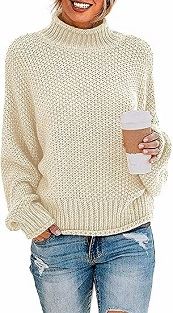
Starting with pre-production, because this is where 90% of the big mistakes (or wins) happen. When a brand sends over a design—say, a Turtleneck Chunky Knit Loose Pullover Sweater from that link earlier—first the factory’s design team will sit down with my raw material crew and me. Wait, let’s make that specific: last month, a small US boutique hit me up for that exact turtleneck pullover. First, we didn’t just grab thick yarn and start knitting. The factory’s pattern maker needed to know: is the “chunky” knit using 100% merino, or a wool-acrylic blend to keep costs low for the boutique? That’s where I come in—my team pulled three different yarn samples, not just the cheapest, but ones that would hold shape after washing (super important for chunky knits, which can stretch out if the yarn’s bad). Then we worked with the factory’s sampling department to make a prototype. Wait, why not just the factory do that alone? Because I catch stuff the factory might miss—like, if the boutique wants a loose fit, but the factory’s standard machine settings make the body 2 inches too tight. I’ve been doing this long enough to know that, so I flag it before we waste 50 yards of expensive yarn. That pre-production step usually takes 7-10 days, and it’s non-negotiable for us—no cutting corners here.
Another example for pre-production: that Women's Sweater Fashion Color Matching Round Neck Jacquard Knitted Sweater. Jacquard is tricky because the color matching has to be exact—like, the red stripe can’t be slightly different across 100 pieces. So here, we suppliers handle the color calibration with our yarn suppliers, and then send the color codes directly to the factory’s machine operators (most knitting machines in Chinese factories use digital software now, right?). We’ll do a test swatch first, send it to the factory, they check it against the brand’s Pantone card, and if it’s off, we adjust the yarn dye before we even run full production. This isn’t something the factory can do alone—they don’t have the on-the-ground dyeing relationships I have with my yarn partners, so that’s a key part of our pre-coop.
Now, moving to in-production collaboration, which is where the real teamwork shines. Once the sample’s approved and the order is locked in, the factory handles the bulk of the knitting, but we suppliers are on call every single day. Let’s take the Off Shoulder Waffle Knit V-Neck Sweater for this part. Waffle knit has a very specific texture—too tight, and it looks like a regular knit; too loose, and it pills like crazy. So while the factory is running the first 50 pieces of the bulk order, my quality control (QC) team will head to the factory’s warehouse that same day to check. Wait, no—we’re not just “checking”; we’re collaborating. If I see that the knit tension is off, I’ll pull the factory’s lead knitter aside and show them the sample swatch we did pre-production, and we tweak the machine settings together. Most factory lead knitters have 10+ years of experience, so they’ll often say, “Oh, wait, if we shift to a slightly different needle size, that fixes it” and I’ll have their back because we already tested that in a small batch earlier. It’s a back-and-forth, not a demand.
Also, factories deal with stuff like yarn shortages all the time. Last quarter, when a global shipping delay hit, I had a client order a big run of Zipper Shawl Cardigan Knitted Sweater—the factory’s primary zipper supplier was delayed. Instead of panicking, I used my backup network of zipper suppliers (something as a supplier, I have) and sent three different zipper samples to the factory that afternoon. We tested them on a handful of cardigans, checked if the zipper pull broke, if it matched the color of the cardigan’s fabric, and by the next day, we had the right zippers. That’s the kind of thing that makes the co-op work—we don’t wait for the factory to have a meltdown; we come prepared with solutions. And factories do the same for me: if a yarn batch I sent has a tiny dye variation, the factory’s finishing team (they’re the ones that cut and sew the parts) will adjust the pattern slightly so it’s not noticeable, instead of tossing 200 sweaters.
Wait, and let’s not forget those Stand Collar Women's Lamb Wool Coat styles—those are a step above regular sweaters, right? They have thicker linings, bigger collars, more intricate stitching. For these, the co-op model gets even tighter. The factory has specialized teams that do the lamb wool attachment, and my team works with them to make sure the wool is properly sewn in, not just glued (which would peel off after a few washes). Last year, a European brand had a complaint that their lamb wool coats had peeling fabric—we traced it back to the stitching tension. My QC team was at the factory’s production line when they noticed a batch had the tension set too low, so we stopped that line immediately, re-did the stitching settings, and fixed the issue before it went out. That’s why this model works—we’re in the factory, every day, not just on the phone once a week.
Now, what about the more behind-the-scenes parts that people don’t talk about? Like payment terms and inventory management. This is a big one that makes or breaks the co-op. Most Chinese sweater factories don’t require 100% upfront payment—they’ll do a 30% deposit when the order is confirmed, and 70% after delivery. As a supplier, I mediate that with the brand, but also with the factory. Wait, why? Because if a brand pays late, the factory doesn’t get stressed, because we have a buffer. But also, if the factory falls behind on production, we negotiate a flexible timeline with the brand. It’s a balance. Also, inventory: if a brand has leftover sweaters, we might store them temporarily, but the factory will offer discounted re-knitting services if they want to adjust the design. No one’s stuck holding the bag here.


Another thing: skill sharing. A lot of Chinese factories are investing in newer knitting technology now—like automated jacquard machines that cut production time by 50%. As a supplier, I share the brands’ feedback with the factories: “Hey, the brand wants more sustainable yarn, can we get this?” and the factories will share their expertise with me: “Wait, that yarn you’re talking about won’t work for chunky knits because it’s too delicate—try this blend instead.” It’s a two-way street, not just “factory makes stuff, supplier delivers it.”
But let’s be real—this model isn’t perfect. There are growing pains. Last year, I had a factory that took on too many orders at once, so they delayed a small run of a sweater for a Australian brand. My job was to step in, find a backup small factory, but that cut into my profit a little. But we fixed it by adjusting the order schedule together—they took on the big orders first, I found a way to deliver the small one on time, and we improved our communication so that doesn’t happen again. Mistakes happen, but the co-op model means we fix them together, not point fingers.
So who is this model for? It’s not just for big global brands. Small boutique brands, even independent sellers on Etsy, can work this way too, as long as they’re transparent. If a small brand has a budget of $5 per sweater, we (suppliers + factory) can work with them to make a simple knit, no fancy jacquard, and it works. The key is communication—no hidden costs, no vague design ideas, no changing requirements at the last minute.
Wait, let’s circle back to those products again because I know those links are part of what’s needed. Every single one of those styles I mentioned—turtleneck pullover, jacquard round neck, off-shoulder waffle, zipper cardigan, lamb wool coat—they all follow this exact model. I’ve worked with factories that make all of these, and each time, the process is the same: pre-production planning together, in-production problem-solving daily, post-delivery follow-up to make sure the sweaters hold up.
Now, if you’re a brand or retailer looking to work with Chinese sweater factories, or if you’re a supplier curious about how this works, here’s the thing: this co-op model isn’t a secret, but it’s also not something you’ll find in a textbook. It’s built on trust, showin’ up to the factory floor, and not being afraid to say “wait, let’s tweak this together.” I’ve been doing this long enough to know that the best sweaters aren’t made by one person or one team—they’re made by the supplier and the factory working as one.
If you’re a buyer looking to source high-quality sweaters, whether it’s that chunky turtleneck, the color-matched jacquard, or any of the styles I mentioned, let’s connect. We can walk through your design, talk about yarn options, and figure out a timeline that works for you. No jargon, no hidden fees, just straightforward work to get you the sweaters you need.
REFERENCES:
- China Textile and Apparel Council. (2023). Global Sweater Production and Supply Chain Trends.
- Knitting Industry Association. (2022). Collaborative Models in East Asian Apparel Manufacturing.
- International Trade Administration. (2023). US-China Apparel Sourcing Guide: Sweater Sector.